
Dr. Claudia Frey - Research Interests
My research focuses on the marine and aquatic nitrogen cycle and the microbial processes that regulate it. I am particularly interested in how microorganisms transform nitrogen compounds under varying environmental conditions and how these processes influence the production and consumption of climate-relevant gases such as nitrous oxide (N₂O). Nitrous oxide is a potent greenhouse gas and ozone-depleting substance, and aquatic environments—from coastal seas to oxygen-deficient regions of the open ocean and lake sediments—are important but still incompletely understood sources.
To investigate these processes, I combine field observations, laboratory experiments, and biogeochemical modeling with stable isotope techniques. Isotope measurements allow me to trace nitrogen transformations and distinguish between different microbial pathways of N₂O production and consumption. A central goal of my work is to better constrain when, where, and why nitrous oxide forms in aquatic systems, particularly in low-oxygen environments such as oxygen minimum zones, eutrophic coastal waters, and stratified lakes.
More broadly, my research aims to understand how environmental change—including deoxygenation, eutrophication, and climate change—affects nitrogen cycling in the ocean and inland waters. By linking microbial ecology, biogeochemistry, and environmental measurements, I seek to improve predictions of how aquatic ecosystems contribute to global nitrogen budgets and greenhouse gas emissions. Ultimately, this work helps clarify the role of the ocean and freshwater systems in the Earth’s climate system and supports efforts to better manage human impacts on aquatic environments.
Education and Professional Experience
- March 2018 – present: Research Assistant, Department of Environmental Sciences, Biogeochemistry Group, University of Basel, Switzerland
- Nov 2016 – Feb 2018: DAAD P.R.I.M.E. Fellow and Postdoctoral Associate, Department of Geoscience, Princeton University, Princeton, 08544, New Jersey, USA
- May 2016 – Oct 2016: Research Associate, Leibniz Institute for Baltic Sea Research, Seestrasse 15, 18119 Rostock
- May 2010 – May 2015: PhD Candidate, Leibniz Institute for Baltic Sea Research, Seestrasse 15, 18119 Rostock; title: „From stable isotopes in the environment to process understanding: Exploring nitrate sinks and sources in the Baltic Sea “
- Mar 2014 – June 2014: Research Assistant, Department of Environmental Science, University of Helsinki, Finland
- 2004 – 2010: Diploma in Biology, University of Rostock
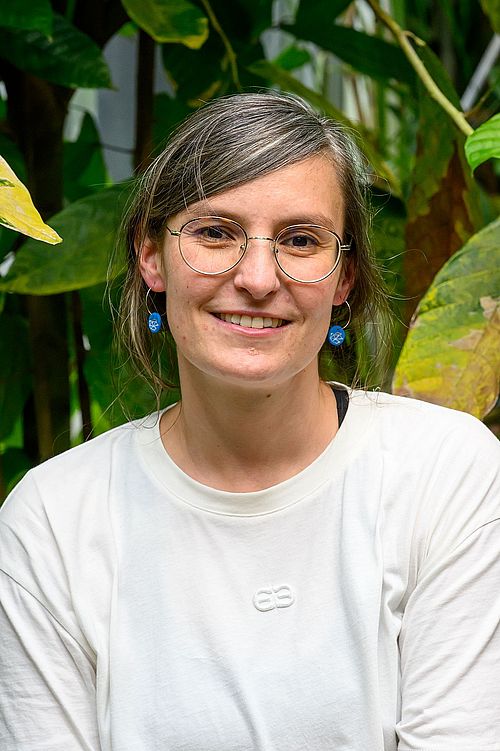
Dr. Claudia Frey
Biogeochemistry / University Basel
Bernoullistrasse 30
CH-4056 Basel
Tel. +41 (0)61 207 35 96
email: claudia.frey-at-unibas.ch
Quick Links
Social Media