

Research interests
Agriculture covers more than 55 million km² of land, making it the largest human-managed ecosystem on Earth. It is a major driver of climate change, deforestation, and biodiversity loss, while also being highly vulnerable to a changing climate. Growing demand for food, feed, fiber, and products from the expanding bioeconomy places additional pressure on agricultural systems. A central challenge is to meet these demands and adapt to changing environmental conditions while minimizing environmental impacts and greenhouse gas emissions.
My research aims to better understand the interactions between agriculture and the environment across spatial scales, from local to global, to support more sustainable and resilient agricultural systems. This includes investigating how climate change and extreme weather affect crop suitability, yields, and agricultural production, as well as exploring the potential and limitations of adaptation through agricultural management, crop and cultivar selection, and shifts in growing periods.
To this end, I develop process-based crop models, empirical approaches, and machine learning models that provide complementary ways to address these challenges, with the overarching goal of building a digital twin of the global agricultural system. The CropSuite model assesses agricultural suitability at high spatial resolution, while CropSuite-Yield simulates crop growth and yield formation. Together, these tools enable the assessment of future agricultural production potential and adaptation strategies under changing environmental conditions.
In addition, I investigate how changes in agricultural production interact with socioeconomic developments, international trade, and land-use decisions. Coupling crop models with computable general equilibrium models, as implemented in the iLANCE framework, links local production conditions to global markets and consumption patterns. This integrated approach enables the exploration of how changes in demand, agricultural management, and policies influence land-use patterns across regions, and helps identify trade-offs and synergies between food security, climate change adaptation and mitigation, and biodiversity conservation.
Current and previous positions
| Since 01/2024 | Senior researcher at the Department of Environmental Sciences, University of Basel, Switzerland. | |
| 2014-2023 | Assistant Professor (temporary position) at the Department of Geography, LMU Munich, Germany. | |
| 2012-2014 | Post-Doc at the Department of Geography, LMU Munich, Germany, in the GLUES project: ‘Global assessment of land use dynamics on greenhouse gas emissions and ecosystem services’. | |
| 2008-2012 | PhD Student at the Department of Geography, LMU Munich, Germany. | |
Education and key qualifications
| 12/2024 | Awarded ‘Venia Docendi’ in the field of Environmental Sciences at the University of Basel, Switzerland. |
| 12/2020 | Awarded ‘Venia Legendi’ in the field of Geography at LMU Munich, Germany. |
| 11/2020 | Completion of the habilitation. Awarded ‘Facultas Docendi’ in the field of Geography at LMU Munich, Germany. Mentors: Prof. Wolfram Mauser, Prof. Ralf Seppelt, Prof. Alexander Löw; Prof. Tobias Hank; External Review: Prof. Sonja Seneviratne. |
| 12/2012 | Doctorate (Dr. rer. nat.) at LMU Munich within the GLOWA-Danube project. Graduation with summa cum laude. Supervisors: Prof. Wolfram Mauser, Prof. Ralf Ludwig. |
| 2007 | Diploma in physical geography at LMU Munich, Germany. Minor subjects: computer science, remote sensing. |
Publications
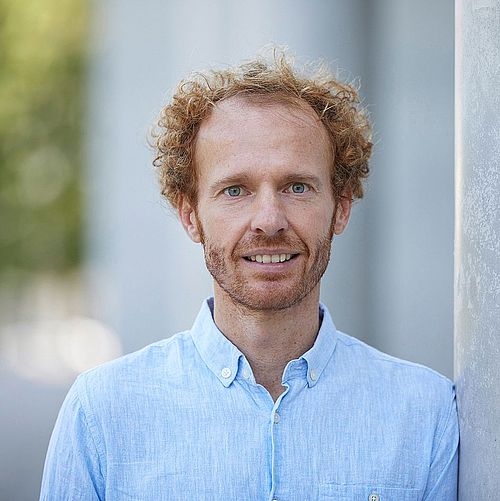
PD Dr. Florian Zabel
Senior Researcher
florian.zabel@clutterunibas.ch
ORCID: 0000-0002-2923-4412
Accounts: Google Scholar, Research Gate,Twitter (X), Bluesky, GitHub, Zenodo
Klingelbergstrasse 27
4056 Basel, Switzerland
Methods
Crop modeling
Land-use modeling
Models
iLance
Crop suit
Quick Links
Social Media