
Peyman Parvizi
Assistent / Doktorand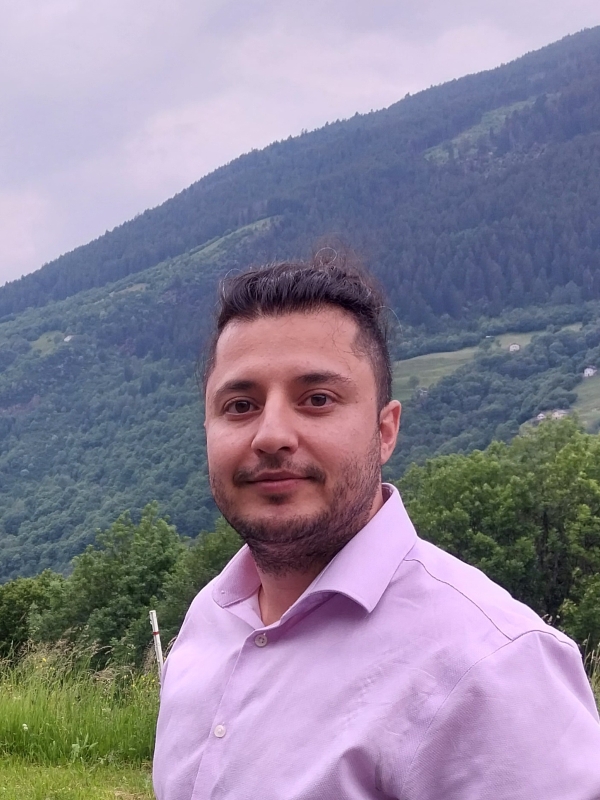
Assistent / Doktorand
Bernoullistrasse 30/32
4056 Basel
Schweiz
Research Interest
My research focuses on Holocene hydroclimate variability in Southwest Asia, with particular emphasis on the Zagros Mountains. I am interested in understanding how rainfall amount, moisture sources, and precipitation seasonality changed during the Holocene, and how these changes were influenced by the interaction of mid-latitude westerlies, Mediterranean–North Atlantic systems, the Indian summer monsoon, the Arabian high-pressure system, and changes in the extent of the Persian Gulf.
As part of the MITRA project, my PhD project aims to develop continuous Holocene speleothem records from the Zagros region, with a main focus on the interval between ~12,000 and 3,000 years ago. Using stable oxygen and carbon isotopes, U–Th dating, trace elements, and fluid-inclusion water isotopes, I will reconstruct past hydroclimatic changes and identify shifts in moisture sources and rainfall seasonality.
By developing and comparing speleothem records along the Zagros Mountains, my research will contribute to a better understanding of regional hydroclimate gradients across Southwest Asia. It will also help clarify how long-term changes in rainfall seasonality, effective moisture, and drought dynamics may have influenced environmental conditions relevant to early agriculture and human–environment interactions in the Fertile Crescent and adjacent regions.
Specific interests include:
-Climate variability in the Zagros Mountains since the beginning of the Holocene.
-Regional differences in rainfall, moisture sources, and precipitation seasonality across the Zagros Mountains.
-Drought dynamics and their environmental impacts in Southwest Asia.
-The role of Holocene Persian Gulf flooding in changing moisture sources and rainfall patterns in the Zagros region.
-Hydroclimate variability and its relevance for early agriculture and human–environment interactions in the Zagros Mountains and the Fertile Crescent.
Quick Links
Social Media